ll your needs in one spot!

Connect to the Best of all worlds!

Search This Blog

Thursday, 8 March 2012

Is the Quran Racist to the black race?

I will provide the material, and you decide if it is or not.

Dr. Azumah in his book: The Legacy of Arab-Islam in Africa provides several examples of Islam’s hatred of Blacks. There is the example in the hadith in which an Ethiopian woman laments her racial inferiority to Muhammad, who consoles her by saying, "In Paradise, the whiteness of the Ethiopian will be seen over the stretch of a thousand years."

Another hadith quotes Muhammad thus: "Do not bring black into your pedigree."

In fact, the Arabic word for slave, “Abd,” became equated with Africans and Blacks with the advent of Islam.

Osama Bin Laden, in a discussion with the Sudanese-American novelist, Kola Boof, in Morocco in 1996 said, “when next you meet an Arab, you should ask what is the Arabic word for slave, you’ll discover that the words are the same “abeed.” Which is why, when an Arab looks at a black African, what he sees is a slave.”

Muhammad owned and sold Black slaves. In fact, he ordered and built the pulpit of his mosque with African slave labour. The Qur'an encourages sex with female slaves in several places. Classical Islamic law allows a light-skinned Muslim man to marry a Black woman, but a Black Muslim man is restricted from marrying a light-skinned woman.

As the literature of the time put it, "only a whore prefers blacks; the good woman will welcome death rather than being touched by a black man.”

So interwoven is slavery with Islam that Islams’ holiest city, Mecca (site of the Haj pilgrimage), was a slave trading capital.

Quoting Azumah again, up until the 20th century, Mecca served as the gateway to the Muslim world for slaves brought out of Africa. "It became a custom for pilgrims to take slaves for sale in Mecca or buy one or two slaves while on Haj as souvenirs to be kept, sold or given as gifts."

Muslim Arab and Persian literature depicts Blacks as "stupid, untruthful, vicious, sexually unbridled, ugly and distorted, excessively merry and easily affected by music and drink.”

Nasir al-Din Tusi, a famous Muslim scholar said of Blacks: "The ape is more capable of being trained than the *****.”

Ibn Khaldun, an early Muslim thinker, writes that Blacks are "only humans who are closer to dumb animals than to rational beings."

Ibn Sina (Avicenna 980–1037), Arab’s most famous and influential philosopher/scientist in Islam, described Blacks as “people who are by their very nature slaves.” He wrote: “All African women are prostitutes, and the whole race of African men are abeed (slave) stock.” He equated Black people with “rats plaguing the earth.”

Ibn Khaldum, an Arab historian stated that “Blacks are characterized by levity and excitability and great emotionalism,” adding that “they are every where described as stupid.”

al-Dimashqi, an Arab pseudo scientist wrote, “the Equator is inhabited by communities of blacks who may be numbered among the savage beasts. Their complexion and hair are burnt and they are physically and morally abnormal. Their brains almost boil from the sun’s heat…..”

Ibn al-Faqih al-Hamadhani painted this no less horrid picture of black people, “…..the zanj (the blacks) are overdone until they are burned, so that the child comes out between black, murky, malodorous, stinking, and crinkly-haired, with uneven limbs, deficient minds, and depraved passions…..”

Some verses:

Quran-(55:72): “Hur (beautiful, fair females) guarded in pavilions;”

Quran-(55:70-77): “ In each there shall be virgins chaste and fair….dark eyed virgins sheltered in their tents whom neither man or Jinn have touched before…”

Narrated Anas bin Malik: Allah's Apostle said, "You should listen to and obey, your ruler even if he was an Ethiopian (black) slave whose head looks like a raisin."

Sahih Bukhari 9:89:256, See Also Sahih Bukhari 1:11:662, Sahih Bukhari 1:11:664

I heard the Apostle say: ‘Whoever wants to see Satan should look at Nabtal!' He was a black man with long flowing hair, inflamed eyes, and dark ruddy cheeks…. Allah sent down concerning him: ‘To those who annoy the Prophet there is a painful doom." [9:61] " Gabriel came to Muhammad and said, ‘If a black man comes to you his heart is more gross than a donkey's *****.

It is also written that allah will BLACKEN the faces of the unbelievers.(Quran, Sura 39:60)

In addition there are also different versions of the Quran. The Warsh version is mostly followed by Africans while the Hafs version is followed by people of the Middle East.

The following verses differ between the Warsh version (popular in Africa) and the Hafs versions (popular in Middle East) of the Quran: 7:57, 9:37, 2:259, 3:81, 6:96, 1:4, 2:140, 2:125, 3:146, 2:132, 91:15, 2:132, 3:133, 5:45, 2:139, 3:81, 2:259, 2:214, 2:9, 2:184 & 28:48.

Thursday, 9 February 2012

Gandhi’s desire for Indians to be segregated from blacks

Gandhi’s desire for Indians to be segregated from blacks was so strong that he went to Johannesburg in late August of 1904 to protest the placing of blacks in the Indian section of the city

LAHORE: Mohandas Karamchand Gandhi (1870-1948), the man who inspired great leaders like Nelson Mandela and Martin Luther King, may have harboured racial sentiments against black people if an article on Sulekha.com is to be believed.

The article quotes a series of letters and petitions from Gandhi, linking the black people of Africa to savages and portraying them as little better than animals. Gandhi writes, “A general belief seems to prevail in the colony that the Indians are little better, if at all, than the savages or natives of Africa. Even the children are taught to believe in that manner, with the result that the Indian is being dragged down to the position of a raw Kaffir”.

According to the article, part of Gandhi’s attitude stemmed from his belief in the Aryan Invasion Theory, claiming that the superior white race from the Steppes subjugated darker races all across Eurasia. Gandhi refused to accept classification with ‘aboriginal’ looking ‘savages’: “A reference to Hunter’s ‘Indian Empire’, chapters 3 and 4, would show at a glance who are aborigines and who are not. The matter is put so plainly that there can be no mistake about the distinction between the two. It will be seen at once from the book that the Indians in South Africa belong to the Indo-Germanic stock or, more properly speaking, the Aryan stock.”

He believed that White rule in South Africa – with the help of a reduction in Asiatic immigration was necessary for civilising the blacks with these characteristics: “We, therefore, have no hesitation in agreeing with the view that in the long run assisted Asiatic immigration - into the Transvaal would be disastrous to the white settlement. People will gradually accommodate themselves to relying upon Asiatic labour, and any White immigration of the special class required in the Transvaal on a large scale will be practically impossible. It would be equally unfair to the natives of the soil. It is all very well to say that they would not work, and that, if the Asiatics were introduced, that would be a stimulus to work; but human nature is the same everywhere, and once Asiatic labour is resorted to, there would not be a sustained effort to induce the natives to work under what would otherwise be, after all, gentle compulsion. There would be then less talk about taxing the natives and so forth. Natives themselves, used as they are to a very simple mode of life, will always be able to command enough wages to meet their wants; and the result will be putting back their progress for an indefinite length of time. We have used the words ‘gentle compulsion’ in the best sense of the term; we mean compulsion of the same kind that a parent exercises over children.”

Gandhi thus remained a firm believer in white settlement and rule in South Africa. More explicitly, he wrote that the White race deserved to be the dominant race in South Africa: “What the British Indians pray for is very little. They ask for no political power. They admit the British race should be the dominant race in South Africa. All they ask for is freedom for those that are now settled and those that may be allowed to come in future to trade, to move about, and to hold landed property without any hindrance save the ordinary legal requirements.”

Along with the dominance of the white race in South Africa, Gandhi also held dear the idea of racial purity: “We believe as much in the purity of race as we think they do, only we believe that they would best serve these interests, which are as dear to us as to them, by advocating the purity of all races, and not one alone. We believe also that the white race of South Africa should be the predominating race.”

Commenting on a petition opposing interactions between the whites and the coloureds, Gandhi wrote: “The petition dwells upon ‘the co-mingling of the coloured and white races’. May we inform the members of the conference that, so far as the British Indians are concerned, such a thing is practically unknown? If there is one thing, which the Indian cherishes, more than any other, it is the purity of type. Why bring such a question into the controversy at all?”

Gandhi’s desire for the Indians to be segregated from the blacks was so strong that he went to Johannesburg in late August of 1904 to protest the placing of blacks in the Indian section of the city: “Why, of all places in Johannesburg, the Indian Location should be chosen for dumping down all the Kaffirs of the town passes my comprehension. ...Of course, under my suggestion, The Town Council must withdraw the Kaffirs from the Location. About this mixing of Kaffirs with the Indians, I must confess I feel most strongly.”

It is unclear from the article whether Gandhi later changed his position. However, it does shed some light on the ideas that shaped the mind of one of the most successful political leaders of the 20th century. *

Saturday, 4 February 2012

From Cuba to Congo, dream to disaster for Che Guevara

The revolutionary leader describes his African war in exclusive extracts from his previously unpublished diary


This is the history of a failure. It descends into anecdotic detail, as one would expect in episodes from a war, but this is blended with reflections and critical analysis. For in my view, any importance the story might have lies in the fact that it allows the experiences to be extracted for the use of other revolutionary movements.
Victory is a great source of positive experiences, but so is defeat, especially if the unusual circumstances surrounding the incident are taken into account: the actors and informants are foreigners who went to risk their lives in an unknown land where people spoke a different language and were linked to them only by ties of proletarian internationalism, so that a method not practised in modern wars of liberation was thereby inaugurated.
These notes will be published some time after they were dictated, and it may be that the author will no longer be able to take responsibility for what is said in them.
More correctly, this is the history of a decomposition. When we arrived on Congolese soil, the revolution was in a period of reflux; then a number of incidents occurred which brought about its final regression, at this time and place at least, in the immense field of struggle that is the Congo.
The most interesting aspect here is not the story of the decomposition of the Congolese revolution, whose causes and key features are too profound to be all encompassed from my particular vantage point, but rather the decomposition of our own fighting morale, since the experience we inaugurated should not go to waste and the initiative of the International Proletarian Army should not die at the first failure. It is essential to analyse in depth the problems that are posed, and to find a solution to them. A good battlefield instructor does more for the revolution than one who teaches a large number of raw recruits in a context of peace...
The idea that guided us was to ensure that men experienced in liberation battles (and subsequently in the struggle with reactionary forces) fought alongside men without experience, and thereby bring about what we called the "Cubanisation" of the Congolese. It will be seen that the effect was the exact opposite, in that a "Congolisation" of the Cubans took place over a period of time. In speaking of Congolisation, we had in mind the series of habits and attitudes to the revolution that characterised the Congolese soldier at those moments of the struggle. This does not imply any derogatory view about the Congolese people, but it does about the soldiers at that time. In the course of the story, an attempt will be made to explain why those fighters had such negative traits.
Letter to Castro

A personal letter written by Che Guevara to Fidel Castro in October 1965 shows the strength of trust between the two men, despite Guevara having left Cuba. Only to Castro could Guevara so openly express his serious doubts about the Congo project, given the competition between rival leaders in different areas.
Congo, 5/10/65
Dear Fidel
I received your letter, which has aroused contradictory feelings in me - for in the name of proletarian internationalism, we are committing mistakes that may prove very costly. I am also personally worried that, either because I have failed to write with sufficient seriousness or because you do not fully understand me, I may be thought to be suffering from the terrible disease of groundless pessimism.
When your Greek gift [Emilio Aragones, a member of the Cuban central committee] arrived here, he told me that one of my letters had given the impression of a condemned gladiator, and the [Cuban health] minister [Jose Ramon Machado Ventura], in passing on your optimistic message, confirmed the opinion that you were forming.
You will be able to speak at length with the bearer of this letter who will tell you his firsthand impressions after visiting much of the front; for this reason I will dispense with anecdotes. I will just say to you that, according to people close to me here, I have lost my reputation for objectivity by maintaining a groundless optimism in the face of the actual situation. I can assure you that were it not for me, this fine dream would have collapsed with catastrophe all around.
In my previous letters, I asked to be sent not many people but cadres; there is no real lack of arms here (except for special weapons) - indeed there are too many armed men; what is lacking are soldiers. I especially warned that no more money should be given out unless it was with a dropper and after many requests. None of what I said has been heeded, and fantastic plans have been made which threaten to discredit us internationally and may land me in a very difficult position.
I shall now explain to you.
Soumialot [Gaston Soumialot, president of the Supreme Council of the Revolution] and his comrades have been leading you all right up the garden path. It would be tedious to list the huge number of lies they have spun.
There are two zones where something of an organised revolution exists - the one where we ourselves are, and part of Kasai province (the great unknown quantity) where Mulele [Pierre Mulele, former minister under Lumumba and the first leader to take up arms] is based.
In the rest of the country there are bands living in the forest, not connected to one another; they lost everything without a fight, as they lost Stanleyville without a fight. More serious than this, however, is the way in which the groups in this area (the only one with contacts to the outside) relate to one another.
The dissensions between Kabila [then second vice-president of the Supreme Council of the Revolution and head of the eastern front where Guevara was] and Soumialot are becoming more serious all the time, and are used as a pretext to keep handing towns over without a fight. I know Kabila well enough not to have any illusions about him. I cannot say the same about Soumialot, but I have some indications such as the string of lies he has been feeding you, the fact that he does not deign to come to these godforsaken parts, his frequent bouts of drunkenness in Dar es Salaam, where he lives in the best hotels, and the kind of people he has as allies here against the other group.
Recently a group from the Tshombist [pro-government] army landed, in the Baraka area (where a major-general loyal to Soumialot has no fewer than a thousand armed men) and captured this strategically important place almost without a fight. Now they are arguing about who was to blame - those who did not put up a fight, or those at the lake who did not send enough ammunition. The fact is that they shamelessly ran away, ditching in the open a 75mm recoilless gun and two 82 mortars; all the men assigned to these weapons have disappeared, and now they are asking me for Cubans to get them back from wherever they are (no one quite knows where) and to use them in battle.
Nor are they doing anything to defend Fizi, 36km from here; they don't want to dig trenches on the only access road through the mountains. This will give you a faint idea of the situation. As for the need to choose men well rather than send me large numbers, you and the commissar assure me that the men here are good; I'm sure most of them are - otherwise they'd have quit long ago. But that's not the point. You have to be really well tempered to put up with the things that happen here. It's not good men but supermen that are needed...
And there are still my 200; believe me, they would do more harm than good at the present time - unless we decide once and for all to fight alone, in which case we'll need a division and we'll have to see how many the enemy put up against us. Maybe that's a bit of an exaggeration; maybe a battalion would be enough to get back to the frontiers we had when we arrived here and to threaten Albertville.
But numbers are not what matters; we can't liberate by ourselves a country that does not want to fight; you've got to create a fighting spirit and look for soldiers with the torch of Diogenes and the patience of Job - a task that becomes more difficult, the more shits there are doing things along the way.
The business with the money is what hurts me most, after all the warnings I gave. At the height of my "spending spree" and only after they had kicked up a lot of fuss, I undertook to supply one front (the most important one) on condition that I would direct the struggle and form a special mixed column under my direct command, in accordance with the strategy that I outlined and communicated to you.
With a very heavy heart, I calculated that it would require $5,000 a month. Now I learn that a sum 20 times higher is given to people who pass through just once, so that they can live well in all the capitals of the African world, with no allowance for the fact that they receive free board and lodging and often their travel costs from the main progressive countries. Not a cent will reach a wretched front where the peasants suffer every misery you can imagine, including the rapaciousness of their own protectors; nor will anything get through to the poor devils stuck In Sudan. (Whisky and women are not on the list of expenses covered by friendly governments, and they cost a lot if you want quality.)
Finally, 50 doctors will give the liberated area of the Congo an enviable proportion of one per thousand inhabitants - a level surpassed only by the USSR, the United States and two or three of the most advanced countries in the world. But no allowance is made for the fact that here they are distributed according to political preference, without a trace of public health organisation. Instead of such gigantism, it would be better to send a contingent of revolutionary doctors and to increase it as I request, along with highly practical nurses of a similar kind.
As the attached map sums up the military situation, I shall limit myself to a few recommendations that I would ask you all to consider objectively: forget all the men in charge of phantom groups; train up to a hundred cadres (not necessarily all blacks)... As for weapons: the new bazooka, percussion caps with their own power supply, a few R-4s and nothing else for the moment; forget about rifles, which won't solve anything unless they are electronic. Our mortars must be in Tanzania, and with those plus a new complement of men to operate them we would have more than enough for now. Forget about Burundi and tactfully discuss the question of the launches. (Don't forget that Tanzania is an independent country and we've got to play it fair there, leaving aside the little problem I caused.)
Send the mechanics as soon as possible, as well as someone who can steer across the lake reasonably safely; that has been discussed and Tanzania has agreed. Leave me to handle the problem of the doctors, which I will do by giving some of them to Tanzania. Don't make the mistake again of dishing out money like that; for they cling to me when they feel hard up and certainly won't pay me any attention if the money is flowing freely. Trust my judgment a little and don't go by appearances. Shake the representatives into giving truthful information, because they are not capable of figuring things out and present utopian pictures which have nothing to do with reality.
I have tried to be explicit and objective, synthetic and truthful. Do you believe me?
Warm greetings ...
Evacuation

By November 1965 Guevara's dream had collapsed against the reality of the Congolese forces' complete incompetence and lack of realism. Grimly he had asked Havana for help to pull out his men, though he toyed with the idea of staying on as a lone exemplar of revolutionary duty.
There was an almost complete disintegration of the troops; some party members even proposed to hold a meeting to ask me to pull out. I was extremely sharp in my replies, warning that I would not accept any such demand or any meeting of that kind and would treat it as treachery, and that I would brand as cowardice even any act of allowing such proposals to circulate. I still had a remnant of authority which kept some degree of cohesion among the Cubans; that was all. But much worse things were happening on the Congolese side.
This paragraph will give some idea of the limbo in which the revolution was then sailing. I will take the liberty of reproducing for you the aspirations, wishes and proposals of the whole population in the Fizi region.
1. The people demand that the military power of our revolution should be entrusted to the friendly forces who are coming to help us, until the country is stabilised.
2. The people request intensive aid from friendly countries, consisting of:
a) military operations, personnel, weapons, equipment, money, etc;
b) technical assistance, engineers, various kinds of technicians, doctors, etc;
c) social assistance, teachers, traders, industrialists.
At 2.30pm we made contact with [the Tanzanian port of] Kigoma. Our message read: Changa: [the Cuban captain responsible for transporting supplies and messages] Total men to evacuate less than 200, will be more difficult each day that passes. We are at Sele, 10 or 15km south of Kibamba.
And I received the longed-for reply.
Tatu: The crossing is set for tonight. Yesterday the commissioner did not let us cross.
The men were euphoric. I spoke with Masengo [the chief of staff of the eastern front] and suggested leaving from that very point at night. As there were a lot of Congolese, the general staff held a meeting at which it was decided that one commander would remain in the Congo with his men and we and the various leaders would evacuate; the troops who were originally from that area would remain there; they would not be told of our intention to withdraw but would be sent on various pretexts to the nearby village.
One of the little boats we still had to ply between various points on the lake arrived and took a large number of the Congolese, but those who were part of our force smelt a rat and wanted to stay. I ordered a selection to be made of those who had conducted themselves best up to that point, so that they would be taken across as Cubans.
For me it was a critical situation. Two men who had comprehensively fulfilled their mission would now be left behind unless they made their way back within a few hours. The full weight of calumnies - both inside and outside the Congo -would fall upon us as soon as we left. My troops were a mixed bunch, and my investigations suggested that I could extract up to 20 to follow me, this time with knitted brows. And then what would I do? All the leaders were pulling out, the peasants were displaying ever greater hostility towards us. But I was deeply pained at the thought of simply departing as we had come, leaving behind defenceless peasants and armed men whose poor battle sense left them effectively defenceless, defeated and with a feeling of betrayal.
For me, to stay in the Congo was not a sacrifice - not for a year, or even for the five years with which I had scared my men. It was part of a concept of struggle that had fully taken shape in my brain. I could reasonably expect six or eight men to accompany me without furrowed brows. But the rest would do it as a duty, either towards me personally, or as a moral duty to the revolution; I would be sacrificing people who could not muster any enthusiasm to fight.
In reality, the thought of remaining in the Congo continued to haunt me long into the night, and perhaps I did not so much take the decision as become one fugitive more. The way in which the Congolese comrades would view the evacuation seemed to me degrading; our withdrawal was a mere flight, or worse, we were accomplices in the deception with which people had been left on the land.
Moreover, who was I now? I had the feeling that, after my farewell letter to Fidel, the comrades began to see me as a man from other climes rather distant from Cuba's specific problems, and I could not bring myself to demand the final sacrifice of remaining behind. I spent the final hours like this, alone and perplexed, until the boats eventually put in at two o'clock in the morning, with a Cuban crew who arrived and set off immediately that very night.
There were too many people for the boats at that late hour. I set three o'clock as the last possible hour for departure, since it would be daylight at 5.30 and we would be in the middle of the lake. Work got under way on organising the evacuation. The sick went aboard, then the whole of Masengo's general staff - some 40 men chosen by himself - and finally all the Cubans. It was a plaintive, inglorious spectacle; I had to chase away men who kept imploring us to take them too; there was no element of grandeur in this retreat, no gesture of defiance. The machine-guns were in position, and I kept the men at the ready, as usual, in case they tried to intimidate us by attacking from the land. But nothing like that happened. There was just a lot of grumbling, while the leader of the would-be escapees cursed in time with the beating of the loose moorings.

Saturday, 7 January 2012

Obama requests immunity for Kagame re Rwanda Genocide and Congo wars

September 14, 2011

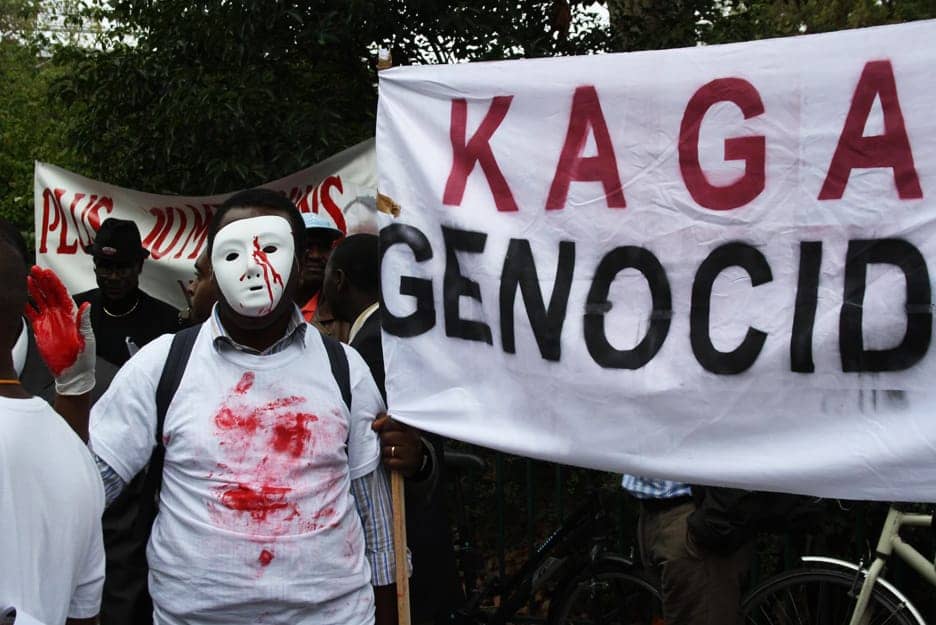
Reporting on the mass protest on Tuesday, Sept. 13, in Paris against Kagame’s visit, Susana Sanz Guardo of Basta de Impunidad en Ruanda (Stop Impunity in Rwanda) wrote that an unprecedented 1,300 people from several European countries marched to the Parliament Building protesting Kagame’s human rights abuses in Rwanda and Congo, calling him “genocidaire (someone who commits or advocates genocide).” “The biggest success has been, without doubt, that for the first time Rwandans and Congolese living in Europe, being victims of the policy of Kigali, have joined together in the same march and with one common voice,” she wrote. “For the first time the protest has been massive. This means that they have lost the fear, that we will not stop and that there is no turning back.”

KPFA Weekend News report broadcast Sept. 10, 2011


In Paris on Sept. 12, 2011, Rwandans and their supporters protest the visit of Rwandan President Paul Kagame. Voice of America reports: “The presidents of France's national assembly and senate declined to meet with Kagame; French Foreign Minister Alain Juppe was on a trip overseas. A number of French generals called Kagame's presence in Paris insulting.”


On Aug. 29, Barack Obama’s State Department filed “Suggestion of Immunity Submitted by the United States of America,” a request for immunity for Rwandan President Paul Kagame in the civil lawsuit Habyarimana vs. Kagame, which alleges Kagame’s guilt in the Rwanda Genocide and Congo wars and demands damages for the widows of assassinated Rwandan President Juvenal Habyarimana and Burundian President Cyprien Ntaryamira.

Obama seems to be requesting more legal immunity for a foreign head of state than he himself enjoys, after the landmark Supreme Court case Clinton v. Jones, which established that a sitting president of the United States has no immunity from civil litigation against him for acts done before taking office and unrelated to the office.


Plaintiffs' complaint in Habyarimana vs. Kagame promises to prove that then Gen. Paul Kagame, now president of Rwanda, ordered the assassination of Rwandan President Habyarimana and Burundian President Cyprien Ntaryamira on April 6, 1994. The crash triggered the ethnic massacres known as the Rwanda Genocide.


Or will the Obama team argue that Kagame is immune from legal action for assassinating the Rwandan and Burundian presidents because that was part of Kagame’s path to seizing power and is therefore related to his office as president of Rwanda?

Plaintiffs’ counsel say they can prove that Kagame ordered the assassination of the Rwandan and Burundian presidents by shooting down their plane, which crashed into the presidential palace in Kigali, Rwanda, on April 6, 1994, triggering the panic and subsequent massacres that came to known as the Rwanda Genocide. The two presidents were returning from peace talks in Arusha, Tanzania, called to try to bring an end to the Rwandan civil war of 1990-1994, which began when then Gen. Paul Kagame and his Rwandan Patriotic Army invaded Rwanda from Uganda on Oct. 2, 1990.

Habyarimana v. Kagame

Habyarimana v. Kagame alleges that Gen. Paul Kagame and nine of his top military commanders and officials are guilty of “wrongful death and murder, crimes against humanity, violation of the rights of life, liberty, and security, assault and battery, intentional infliction of emotional distress, violations of the Racketeer Influenced and Corrupt Organizations Act, torture, and continuing conspiracy in furtherance thereof” in Rwanda and its neighbor, the Democratic Republic of the Congo. Plaintiffs allege that many of these crimes, including the assassination of the Rwandan and Burundian presidents, were committed before Kagame succeeded in overthrowing the government and becoming first a government official and then president.


Wreckage of the plane that carried Rwanda President Juvénal Habyarimana and Burundi President Cyprien Ntaryamira to their deaths is guarded in Kigali.


The suit demands a jury trial, in which evidence would become public record, and might then be included as evidence in a criminal trial.

Peter Erlinder and lawyers Kurt Kerns and John P. Zelbst filed the suit on behalf of Mesdames Habyarimana and Ntaryamira in the federal District Court of Western Oklahoma in Oklahoma City prior to Kagame’s April 30, 2011, commencement address at Oklahoma Christian University.

Kagame failed to answer the complaint within the time allowed, and the court thus declared a default judgment in favor of Mesdames Habyarimana and Ntaryamira.


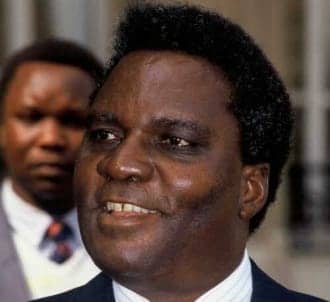
Rwandan President Juvénal Habyarimana


Burundian President Cyprien Ntaryamira


This judgment could, however, quite likely be overturned if Kagame, Obama and the State Department were willing to let the case proceed on its merits to a jury trial.

Pierre Prosper, a lawyer who served as George Bush’s second United States ambassador-at-large for war crimes issues from 2001 to 2005, is representing Kagame in his claim that he was not properly served with the lawsuit and that he therefore cannot be expected to answer the lawsuit or be declared in default for failing to answer.

Kagame was not properly served?

It seems unlikely that the State Department would have intervened had they expected Pierre Prosper’s challenge of proper service, by a team of experienced lawyers and private investigators, to succeed.


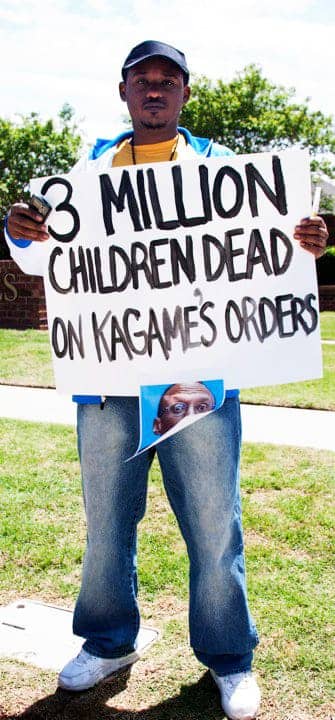
Claude Gatebuke, with other Rwandans and supporters, protested the April 30, 2010, visit of Kagame to Oklahoma Christian University, where he was served with the lawsuit on behalf of the assassinated presidents’ widows. – Photo: Kendall Brown


But it’s difficult to argue that Kagame was not properly served and remains unfamiliar with the lawsuit, considering that his own prosecutors presented portions of it as evidence against law professor Peter Erlinder following his arrest in Kigali, Rwanda, in May 2010, after he arrived to defend opposition leader Victoire Ingabire Umuhoza.

Kagame’s prosecutors’ use of the lawsuit now as evidence against Ingabire herself make it even harder to argue. Ingabire stands in the dock in Kigali, facing a possible sentence on charges of terrorism and “genocide ideology,” i.e., refusing to deny that Hutus as well as Tutsis died in ethnic violence before, during and after the genocide.


Executive immunity after Clinton v. Jones

This is the first time that the U.S. State Department has requested immunity in a civil lawsuit for a foreign head of state in U.S. courts beyond that which U.S. presidents can claim after Clinton v. Jones, a landmark U.S. Supreme Court case establishing that a sitting president of the United States has no immunity from civil litigation against him for acts done before taking office and unrelated to the office.

The State Department has claimed immunity for Kagame’s alleged wrongful acts before he became the president of Rwanda, an immunity which Bill Clinton could not claim from Paula Jones’s lawsuit, which she filed when he was president of the United States, suing him for what he allegedly did while he was governor of Arkansas.

On Monday, the wives of the assassinated Presidents of Rwanda and Burundi filed their “Objections to the August 29 State Department Suggestion of Immunity on Behalf of Rwanda’s President Kagame” and cited the State Department statement of interest of the United States of America, No. 1:104 CV 1360 (Feb. 14, 2011) (LMB), declaring that immunity is only applicable to “official acts by a sitting government,” with which all parties agree.

Law professor Peter Erlinder

“It is astounding that the Obama-Clinton-Koh State Department would choose Paul Kagame as the first head of state on whose behalf to assert immunity for unofficial actions,” observes law professor Peter Erlinder, “wrongful acts before becoming head of state, in light of the clear legal guidance of Clinton v. Jones and the factual record of massive crimes committed by Kagame before he became titular head of state under questionable circumstances in 2000 and again in 2003 and considering negative White House comments that ‘an election is not democracy’ after opposition parties were outlawed and journalists expelled and assassinated in the rigged election in August 2010.


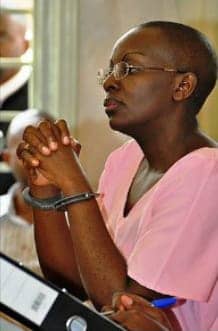
Victoire Ingabire Umuhoza, who would likely have prevailed over Paul Kagame had he allowed her to run in last year’s presidential election, has endured nearly a year in Rwanda’s maximum security prison and is now on trial.


“The objection on behalf of the presidential widows filed today lists French and Spanish indictments; four U.N. Security Council reports from 2001-2008; a 600-page UNHCHR report of Kagame’s Rwandan Patriotic Front (RPF) genocide, war crimes and crimes against humanity between 1993 and 2003 issued Oct. 1, 2010; and U.N.-ICTR prosecutor reports from 1994 to 2003, all of which confirm massive crimes committed by Kagame and his Rwandan Patriotic Front that are in the public record.

“The irony of the ‘Suggestion of Immunity’ is compounded because Victoire Ingabire, the would-be presidential candidate against Mr. Kagame whom I attempted to advise in Rwanda in May 2010, which resulted in my own arrest by Kagame on charges of ‘genocide ideology,’ is now in the dock in Kigali facing trumped-up terrorism charges, as reported in the New York Times Sept. 10, 2011, during the same week that the Obama administration has asserted immunity for massive crimes for which Mr. Kagame is charged in multiple criminal indictments and U.N. reports.

“The question is, why IS protecting Mr. Kagame so important for U.S. policy-makers, anyway?”

Habyarimana vs. Kagame, the civil lawsuit, is available here.

Suggestion of Immunity [Kagame’s] submitted by the United States of America is available here.

Objections to the August 29 State Department Suggestion of Immunity on Behalf of Rwanda’s President Kagame is available here.

Ingabire on trial, Kagame in France, Obama for Kagame immunity

Transcript of KPFA Weekend News report broadcast Sept. 10, 2011

KPFA Weekend News Host Cameron Jones: Victoire Ingabire’s trial will resume in Kigali, Rwanda, on Monday, where Ingabire is expected to testify in her own defense. Ingabire is on trial for terrorism and genocide ideology, which, in her case, means refusing to deny that Rwandan Hutus as well as Tutsis died in ethnic violence before, during and after the 1994 Rwanda Genocide.


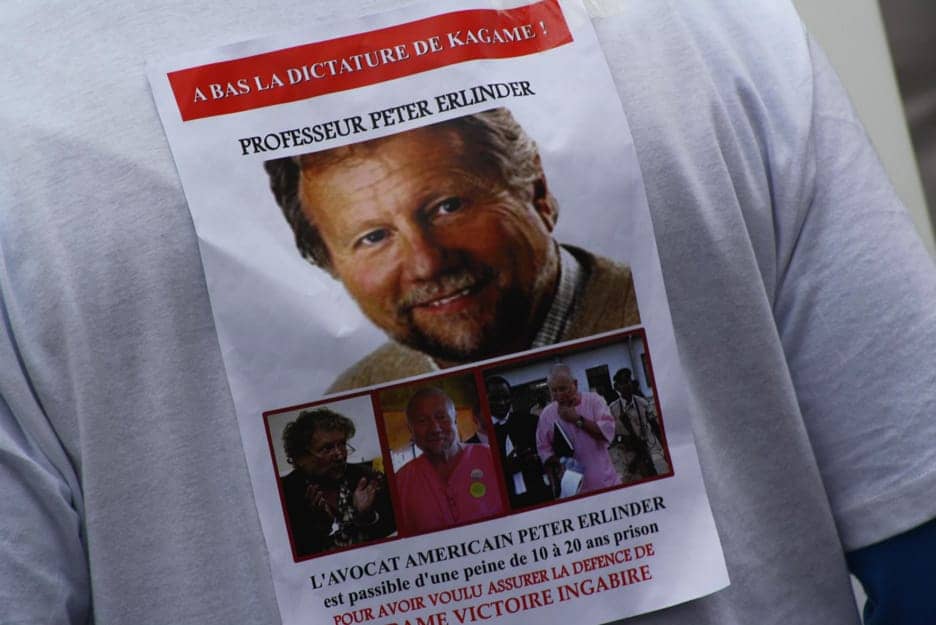
Law professor Peter Erlinder, arrested last year when he went to Rwanda to defend presidential candidate Victoire Ingabire, is featured in this poster worn by a protester against Rwandan President Kagame’s visit to Paris Sept. 12, 2011.


As Ingabire prepares to testify, Rwandan President Paul Kagame is on his way to France in response to the invitation of French President Nicholas Sarkozy and President Obama has requested immunity for Kagame as a head of state in the civil case, Habyarimana v. Kagame, which alleges Kagame and his officers’ guilt in the Rwanda Genocide and Congo wars and demands damages for the widows of Rwandan President Juvenal Habyarimana and Burundian President Cyprien Ntaryamira. Ann Garrison has this report:

KPFA/Ann Garrison: As Victoire Ingabire prepares to testify in her own defense, Rwandan President Paul Kagame is on his way to France at the invitation of French President Nicholas Sarkozy. Sarkozy has sent French Foreign Minister Alain Juppé to Asia for the duration of Kagame’s visit.

Juppé has publicly disapproved of the invitation and said that the official Rwandan report on French involvement in the genocide is a collection of lies assembled to stop the investigation of Kagame and his senior officers and government officials’ crimes, including genocide, war crimes and crimes against humanity, an investigation conducted by the French court of Jean-Louis Bruguiere.

Susana Sanz Guardo is a principle organizer with Basta de Impunidad en Ruanda – in English, End Impunity in Rwanda – an international organization based in Spain. KPFA spoke to Sanz Guardo as she prepared to travel to France to join Rwandan, Congolese, Burundian and international human rights activists in protesting Sarkozy’s invitation and Kagame’s presence in France.

Susana Sanz Guardo: His visit is really surrounded by a strange atmosphere, and has awakened most human rights organizations, who have asked to be mobilized. Military diplomatic French people are also doing their work, who are all against Kagame’s visit.

KPFA: On Friday, in the United States, President Obama asked a federal court in Oklahoma City to grant Kagame immunity in the civil suit alleging his guilt in the Rwanda Genocide and Congo wars filed by William Mitchell law professor Peter Erlinder and Wichita lawyer Kurt Kerns. Rwandan American legal scholar Charles Kambanda, a professor at St. John’s University Law School in New York City, had this to say about Obama’s request:

Charles Kambanda: In this case, in my opinion, the interests of the people who have come to this court – of the United States court – are far greater than the interest the United States might have in protecting Kagame. Also the interest the United States has in protecting its image as the pioneer of fighting for the helpless people who are denied their rights by their leaders is far compelling to any interest the president of the U.S. can possibly think of in Kagame’s case.

KPFA: For Pacifica, KPFA and AfrobeatRadio, I’m Ann Garrison.

San Francisco writer Ann Garrison writes for the San Francisco Bay View, Global Research, Colored Opinions, Black Star News, the Newsline EA (East Africa) and her own blog, Ann Garrison, and produces for AfrobeatRadio on WBAI-NYC, Weekend News on KPFA and her own YouTube Channel, AnnieGetYourGang. She can be reached at ann@afrobeatradio.com.